
Parameters
Joint Style
Classic finger joints on all edges — for gluing.
Dimensions
Width of the toolbox (X-axis)
Depth of the toolbox (Z-axis)
Height of the front and back panels
Height of the arched/diagonal section above the walls
Rounded arcs on side panels
Material
Material thickness
Finger Joints
Target width of each finger
Minimum number of fingers per edge
Handle
Width (height) of the handle bar
Two bars side by side for better grip comfort
Slight upward curve on the handle bar
Divider
Add a center divider panel
Height of the center divider
Layout
Compact arrangement instead of cross pattern
Gap between parts in the layout
Toolbox Designer
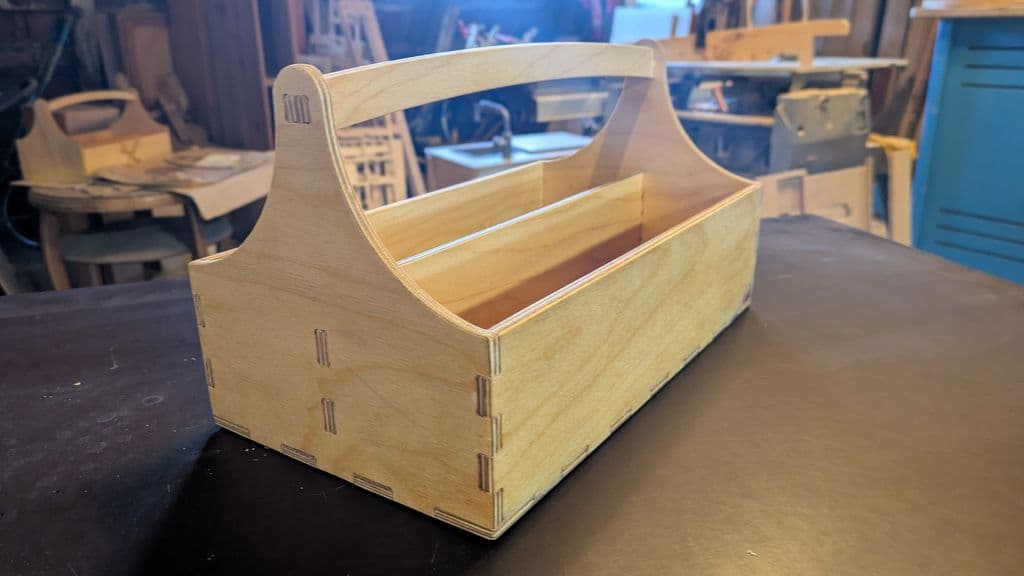
Create a classic toolbox with finger joints. Choose an arc or diagonal profile for the side panels, add a double handle bar, a curved grip and a height-adjustable center panel – or go for the enclosed build, where the side panels wrap around the walls with a smooth lip.
Side profile
Pick an elegant arc or straight diagonals for the side panels; height and shape are fully adjustable. In the enclosed build the side panels wrap around the walls, with optional rounded corners.
Handle bar
A continuous handle bar gives the box its stiffness and carrying comfort. Double it up for heavy loads and add an ergonomic curve to the grip.
Optional center panel
A divider panel splits the box into two compartments. Its height is set independently of the side profile.
Tips for toolboxes
- Material: 6–10 mm plywood carries real tools. Use the same thickness for all parts – the handle bar and the slots are sized from it.
- Handle: For heavy loads choose the double handle bar. Sand or round the bar edges after cutting; the curved grip option already leaves a comfortable shape.
- Center panel: Keep the center panel a little lower than the side profile so long tools lift out easily. Leave it out for one big compartment.
Made with this tool
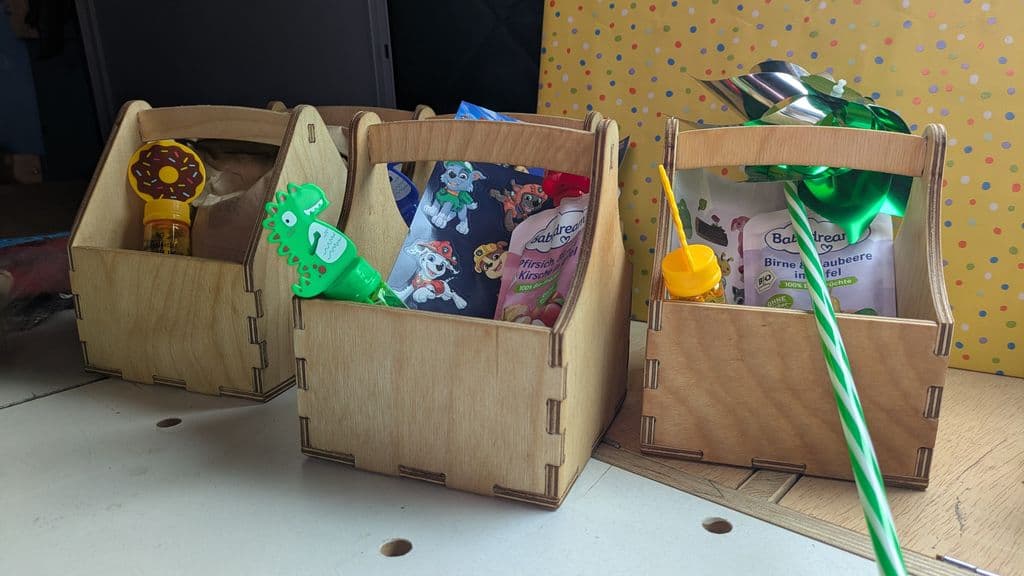
All makes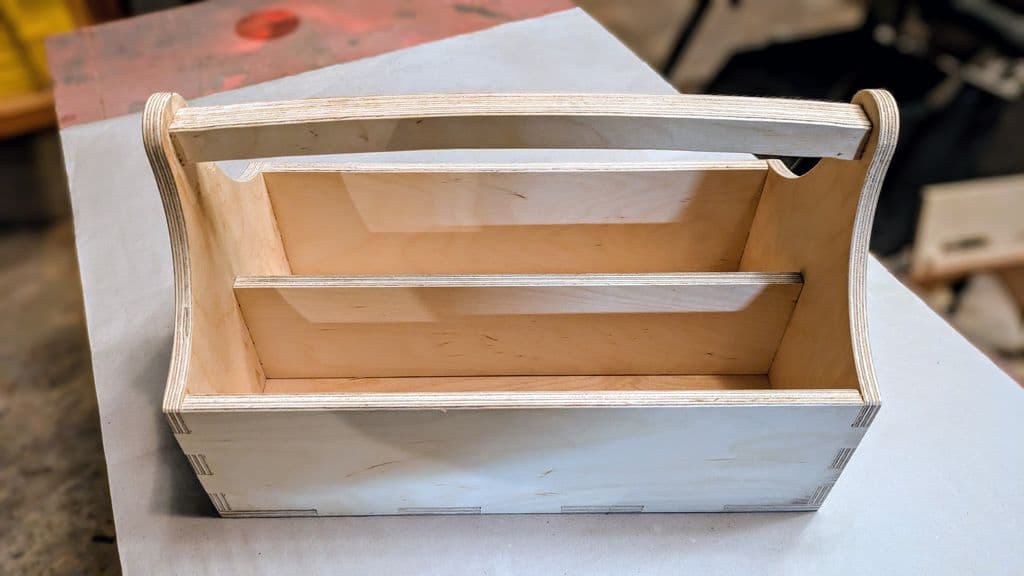
Design for free in the tool above, export as SVG, DXF or PDF. See all tools or compare plans.